Phase 1: Destination Ecuador
Destination Guide: Ecuador
You may be wondering why, out of any country in the world in which I could move, my number one choice is Ecuador. The majority of people can’t even point it out on a map. Most people I know would never consider South America, unless all flights to Europe and South East Asia were canceled for the foreseeable future. However, this post will help you understand why I believe that Ecuador is a solid choice for a year abroad.
Reasons to Go:
Baños de Agua Santa
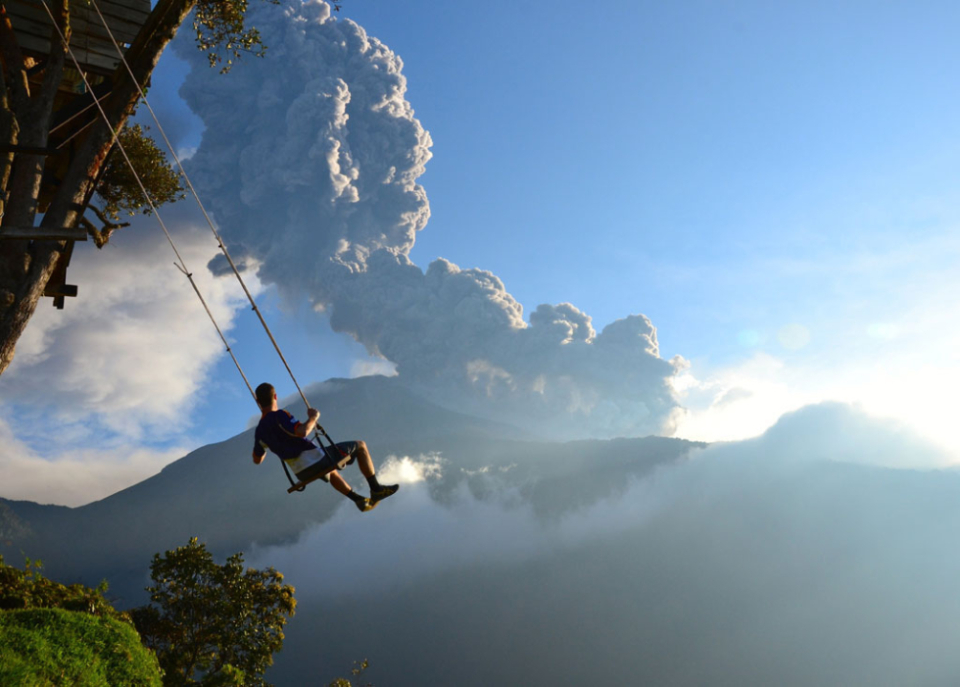
The town, known locally as Baños, is often referred to as the “Gateway to the Amazon,” so obviously I need to stop here at some point. Gotta report back to the big A, that I visited the motherland. Set high in the Andes, Baños is filled with hot springs, which are said to have healing properties. It is also home to over 60 waterfalls and apparently the locals believe that the Virgin Mary showed up near one of said waterfalls. However, the REAL reason I have to visit Baños is to visit Casa del Arbol and the Swing at the End of the World. I am terrified of heights…but I just need to have the experience of feeling like I am flying without the risk associated with skydiving.
Tena
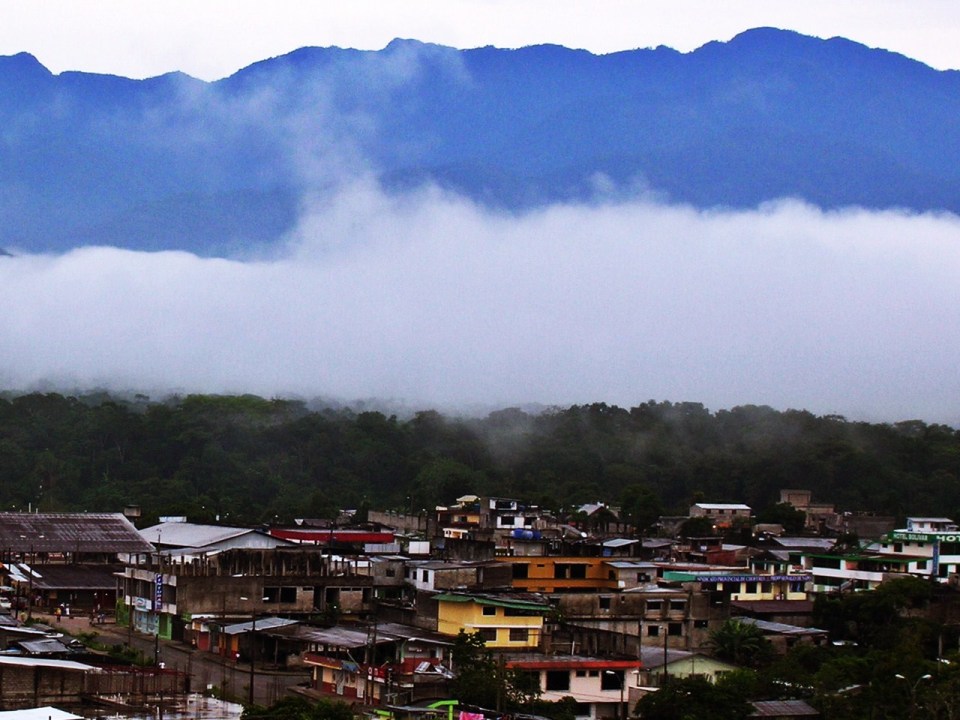 Tena is popular with tourists as a launching point for kayaking or rafting tours of the Ecuadorian Amazon. Which I definitely want to do.The town is surrounded by forested hills and located at the edge of the Andes. Because of its rainforest location, it rains here… all year round. The rains are heaviest from April to June, so maybe don’t go then?
The Galapagos Islands
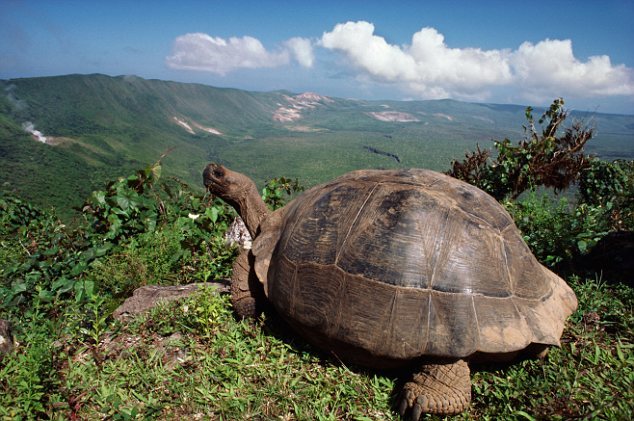
The Galapagos Islands, made famous by Charles Darwin in 1836, are home to a vast number of endemic species (and SO many tourists); which Google told me means they only exist there. That’s pretty cool, right? Everyone is always talking about the turtles, but did you know that there are also Galapagos PENGUINS? I’m sold.
Cuicocha Lake
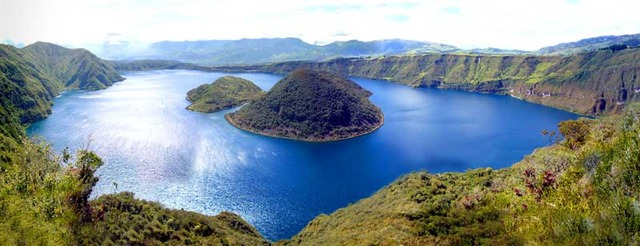
Cuicocha Lake is inside the Cotacachi Volcano in the Cordillera Occidental of the Ecuadorian Andes. If you visit the lake on the second day of the Sun Festival, you can witness indigenous shamen bathe in the acidic waters for “cleansing and purification.” I think I will pass on the purification. The lake’s name, when translated, means Guinea Pig Lake. The guinea pig or cuy as they are called, have always been a very important food staple in Ecuadorian life. Not really sure what they have to do with a lake though…
The Equator
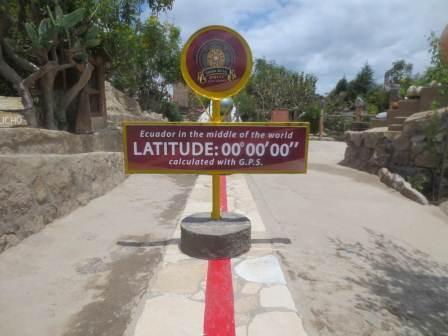
I know, I know. This is actually really lame because the monument that is supposed to mark the Equator is not actually on the Equator. But… at least they marked the actual location with a red line and this handy sign. It’s not necessarily on my bucket list, but if I happen to come across it in my travels, I will be sure to take my Instagram photo in the right spot.
El Panecillo in Quito
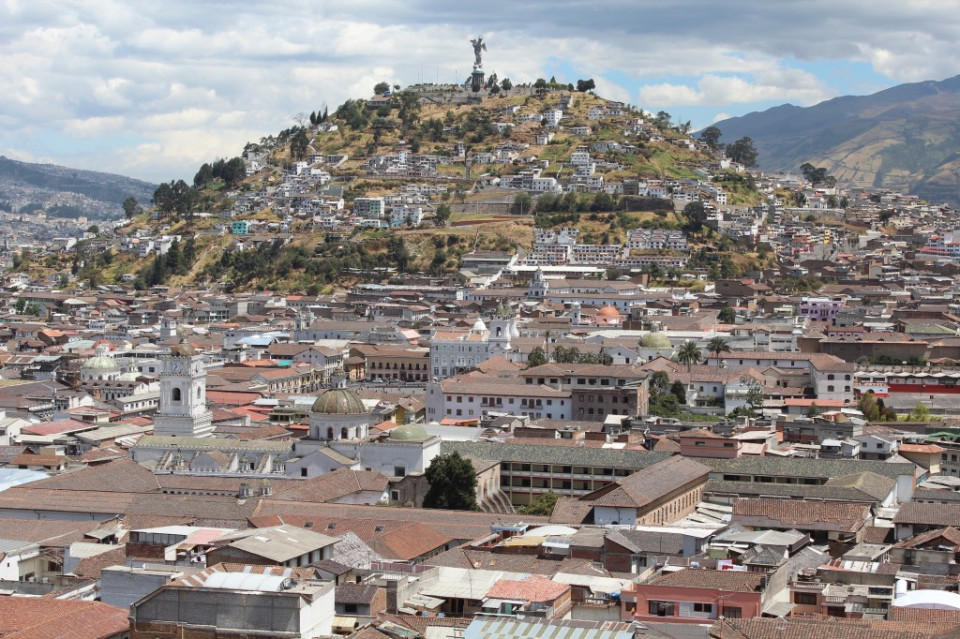
El Panecillo is the 650 ft. high hill with volcanic origin in Quito. It has views of the historic Old Town. In 1976, a Spanish artist was commissioned to build a 45 ft. statue of the Virgin Mary atop the hill. To this day, it is one of the only representations of the Virgin Mary with wings. Using Quito as a home-base would make this an easy one to tick off.
Cotopaxi Volcano
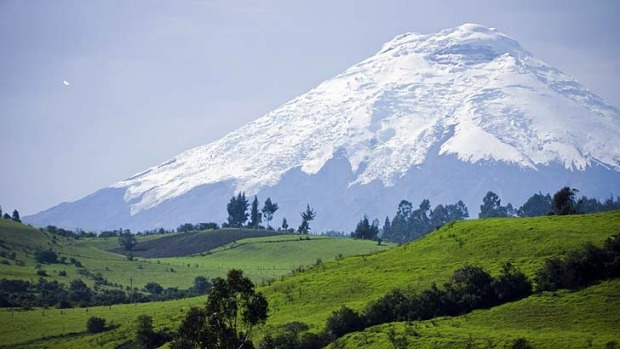
Cotopaxi is the second tallest peak in the country (5,897 m / 19,347 ft.) and the third tallest active volcano in the world. Woah. It also happens to feature one of the only remaining glaciers along the equator. Double whoah. With global warming at work, this one still has a limited lifespan. Take a day trip from Quito to hike this beauty and see the glacier before it disappears forever. The more adventurous folks can rent a mountain bike and ride it down the side of the volcano, I will probably not be participating in that…
Otavalo Market
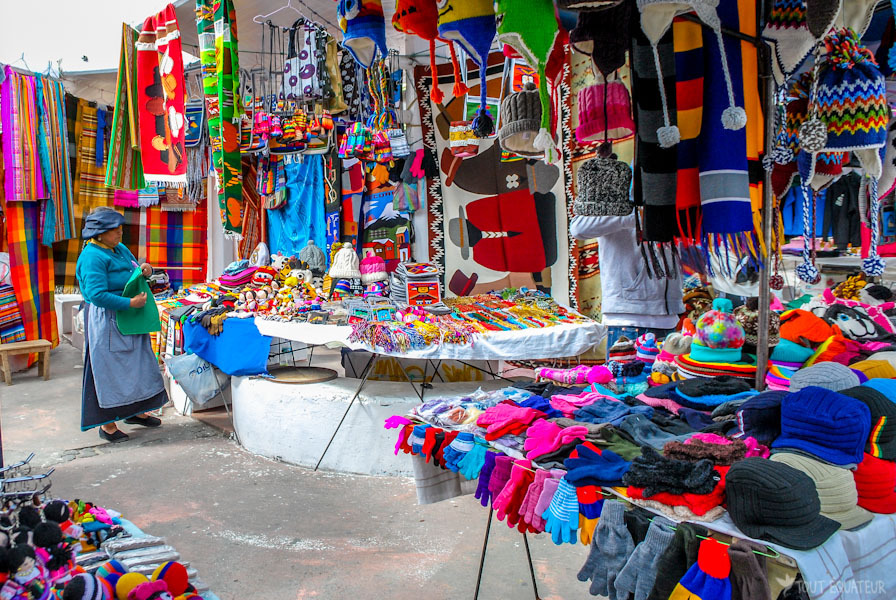
I will definitely need to stop by South America’s largest marketplace which is just a short 3-hour bus ride from Quito. The indigenous Otavaleño people are known for their wool textiles that are sold at the market, which is on Saturdays. There is a town near Otavalo called Cotacachi. This town is the center for Ecuador’s leather production, which could be dangerous… I am always in need of a new handbag, and wallet, and belt….dammit.
Montañita
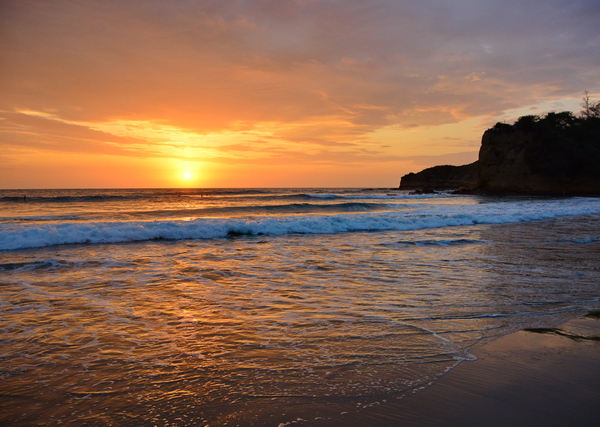
Montañita is a small coastal town northwest of Guayaquil. The average temperature is 82°F (28°C), but it rains from December to May. It became popular during the sixties with the hippie folk who enjoyed surfing the calm, consistent waves. I have never really had an urge to learn to surf. I have tried wakeboarding (I’m decent), but I don’t really like the idea of not being strapped to the board, but if I make it to Montañita, I promise that I will learn to surf. No matter how long it takes me.
Last, but certainly not least: Vilcabamba in the Valley of Longevity
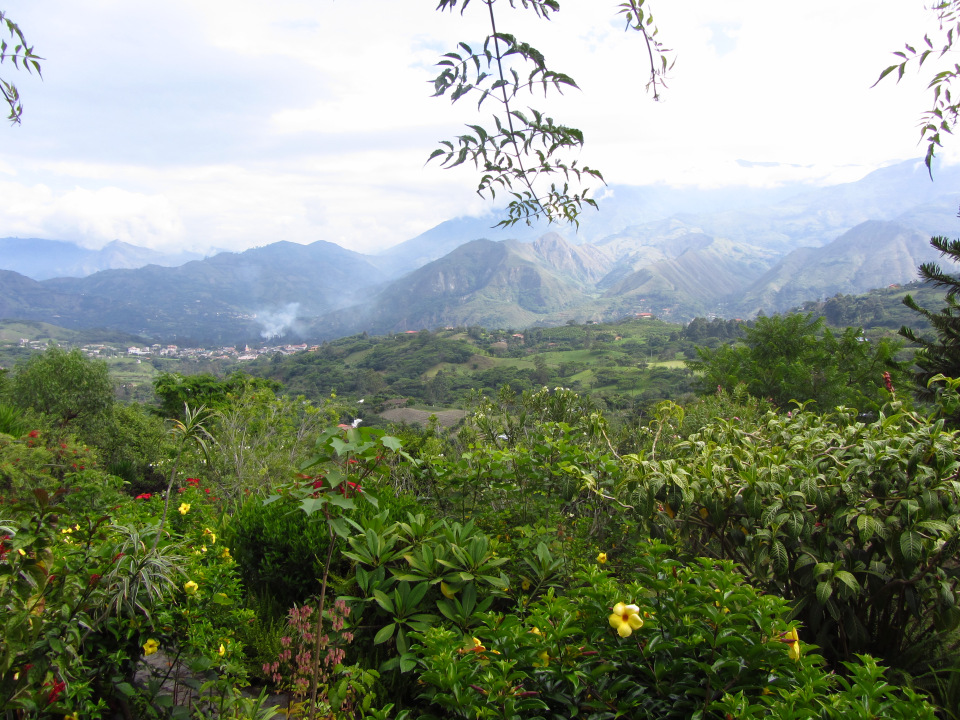
Vilcabamba has long been called the “Playground of the Inca.” Apparently, Incan royalty used to consider it a bit of a retreat. Now it is known as the Valley of Longevity because many of the residents live to be 100 or older. One rumor says someone lived to be 135. The Ecuadorian government hired a medical journalist who found that the water was ideal for promoting optimum human health. A Nobel Prize winning chemist says it has something to do with the fruit in this area having more antioxidants than anywhere else in the world. Everyone is entitled to their own opinion, but I choose to believe we have found the fountain of youth. If I end up making it here, I probably won’t ever leave.
Climate:
The climate throughout Ecuador is varied depending mostly on altitude. Along the Pacific Coast, you will see tropical temperatures, but avoid the rainy season because it’s a doozy. In the Andean highlands(Quito, Cuenca, and Loja), you are likely to experience a temperate, but dry weather. Obviously pack a rain jacket if you plan on venturing into the Amazon RAINforest.
High Season (Jun-Sep)
- Sunny, clear days in the highlands; less rain in the Oriente.
- December to April is high season on the coast: expect warm temperatures and periodic showers.
- January to May is high season in the Galápagos.
Shoulder Season (Oct-Nov)
- Cooler temperatures, more showers (usually sun in the morning and rain in the afternoon) in the highlands.
Low Season (Dec-May)
- Cooler, rainier days in the highlands.
- June to December is low season in the Galápagos, with cooler, drier weather and rougher seas.
- Low season is April to July in the Oriente when heavy rains are common.
Languages:
Most people in Ecuador speak Spanish, which is why this is my number one choice so far. I am really trying to become bilingual and I took Spanish in high school, so I figured it would be the easiest. It would be a nice start to learning all the romance languages. Everyone always say that full emersion is the only way. Though Spanish is widely used, there are officially 24 recognized languages spoken throughout the country. Most are Amerindian languages such as Kichwa and Awapit.
Government:
Ecuador operates under a democratic president. Their constitution was written in 2007, which means it is probably a bit more progressive than the US Constitution. Oh, and they made voting mandatory for everyone aged 18 to 65. Interesting… I wonder what the effects of that have been, other than people voting for themselves of course.
Health Care System:
International Living ranked their health care system an 82/100, which is not too bad for a 3rd world country. In the larger cities, there are world-class hospitals and medical centers. You can be treated at a hospital without an appointment at no cost under their current health care system.
Safety:
The State Department’s travel site is always the first place I go when researching a potential destination. Here is a synopsis on what they have to say about Ecuador:
- Watch out for volcanos. There are a bunch of active ones, three within 65 miles (100m) of Quito
- Earthquakes that trigger tsunamis…hmm….
- Lots of protests, mostly peaceful
- Stay away from the Ecuador-Colombia border due to gangs, terrorist organizations, drug and arms trafficking. There have been 11 known American kidnappings in this region in the last 11 years, Don’t become a statistic.
- Make sure your boat to the Galapagos Islands is up to code because most of them are not.
- Ecuador has a high crime rate and few police officers. Oh and apparently, many of them are not huge fans of Americans.
- Watch out for the “Secuestro Express” taxi services. They are super sketch. Always order a taxi by phone.
- Emergency phone numbers in Ecuador vary by region. In Quito and Ibarra, dial 911. In Guayaquil, Cuenca and Loja, the number is 112. Elsewhere, dial 101 for police,102 for firefighters or ambulance, or 131 for the local Red Cross. Operators typically speak Spanish only, so try your best.
Visa Requirements:
A US citizen can enter Ecuador on a tourist visa for up to 90 days by simply presenting their passport. If you are planning to visit for longer than 90 days, you must obtain a visa beforehand. It doesn’t seem to difficult to get a tourist visa that lasts up to 180 days.Foreign nationals planning to stay in Ecuador for more than 90 days need to apply for a visa and must present the following documents:
- Valid passport for more than 6 months.
- Police certificate with criminal record of the State where s/he resides.
- Medical certificate.
- Return ticket (for air, land or sea travel).
- Two photographs
- Application form
- Certificate of financial solvency to the satisfaction of the Consular Officer (either a bank letter stating the applicant’s monthly balance OR a personal guaranty of an Ecuadorian citizen or a foreigner residing in Ecuador in a duly notarized document OR a certificate stating the applicant’s income OR any other document that proves the applicant has enough funds for his stay in Ecuador).
For stays longer than 180 days, you will have to apply for a Resident/Immigrant visa. The process can take 4 to 8 weeks for approval. Here are the categories of residents, the bold option being the one I would choose:
- 10I Retired persons who receive pensions from their native countries (pension from a stable source, at least $8,000 USD per year).
- 10II Real estate and securities investors who are willing to invest in Ecuador the equivalent of at least 350 minimum monthly general salaries (S.M.V.G.), plus 100 SMVG per dependant, or amount specified by Consular Officer (in the U.S. at least $15,000 USD).
- 10III Investors in industry who wish to export agricultural products, livestock, or minerals, provided they bring capital the equivalent of at least 600 minimum monthly general salaries to Ecuador, or amount specified by Consular Officer (in the U.S. at least $25,000 USD).
- 10IV Companies with foreign local agents who possess unlimited power of attorney to represent the company in Ecuador, provided that 80% of the company’s local personnel are Ecuadorian.10IV Technicians or technical experts under contract with a company established in Ecuador.
- 10V Professionals with university degrees recognized by a national university, who wish to practice their profession in Ecuador. Should the applicant’s profession not exist in Ecuador, the degree must be locally certified. The applicant must also fulfill the requirements for such practice (e.g. bar).
- 10VI Individuals economically dependent on spouses or on a bloodrelated family member (family).
Vaccination Requirements:
Vaccinations suck. No one likes showing up at the doctor’s office and getting stuck with a needle. However, most people would prefer it over the alternative: death. I always turn to the good ol’ CDC when looking for vaccination based information because they have it broken down easily by country. Below is a list of vaccinations and their corresponding level of necessity:
Required for Entry:
- Up-To-Date Routine Vaccinations: MMR, diphtheria-tetanus-pertussis vaccine, chickenpox, polio
- Hepatitis A
- Typhoid
Suggested:
- Hepatitis B
- Malaria
- Rabies
- Yellow Fever
Cost of Living:
From what I have gathered, the typical American can live on between $800 and $1600 dollars a month.
Rent:
After browsing Craigslist for only a few minutes, I found a few apartments in the $200-$300 range in both Quito and Cuenca. That’s not too bad considering I pay $1200 a month for a 400 sqft. studio in Seattle now. Utilities will add about $25 to your monthly total, rounding your monthly costs out to about $325.
Food:
Food seems to be relatively inexpensive, especially if you are planning to eat at street vendors and shop the markets. A meal at a nice sit-down restaurant will probably cost you in the range of $30. I would estimate a budget of $15 a day on food would be sufficient for one person. That would bring your monthly cost to $465.
Local Transportation:
Most one-way bus tickets within city limits will cost around $0.25. Longer journeys will cost you a bit more. The bus ride from Quito to Baños will run you a hard $3.50. I would probably set my transportation budget at about $25 a month.
Health Care:
Most people buy into the government health care system. The cost for this is about $70 a month.
Travel and Sightseeing:
No matter my location, I always like to set $200 a month aside for travel expenses. You never know when you want to catch that flight to Roatan.
Okay, so let’s add this all up. I am looking at $1085 in monthly expenses to live in Ecuador. If I were to spend a year there, my total budget would be $19,530 since you always want to multiply your budget by 1.5 to prepare for unforeseen expenses that inevitably come up.
Well, there you have it. Still wondering why I would choose Ecuador as my number one destination? The place is freaking breathtaking and the weather is hot, but not too humid in most places. I can learn Spanish through immersion. The governmental system is similar to that of the US, with limited unrest at the moment. Transportation is inexpensive and fairly reliable. Health care is above-average. And it’s CHEAP.
If you love it, think I left something out, got something wrong, or have any general feedback, please let me know! Subscribe to follow my story as I plan, prepare for, and execute a year abroad! Don’t forget to let me know which location you think I should choose.
Day 2/560
This is amazing, I am moving to Ecuador next year and this post was great, I really enjoyed it and found it very helpful :) Thanks!
LikeLike
Thanks Emily! I wish you the best on your travels. I should have more information on Ecuador to come. Follow my story if you are interested :)
LikeLiked by 1 person
I was in Quito an the Galapagos last October and had the best time
LikeLiked by 1 person
Wow 😍
LikeLiked by 1 person